
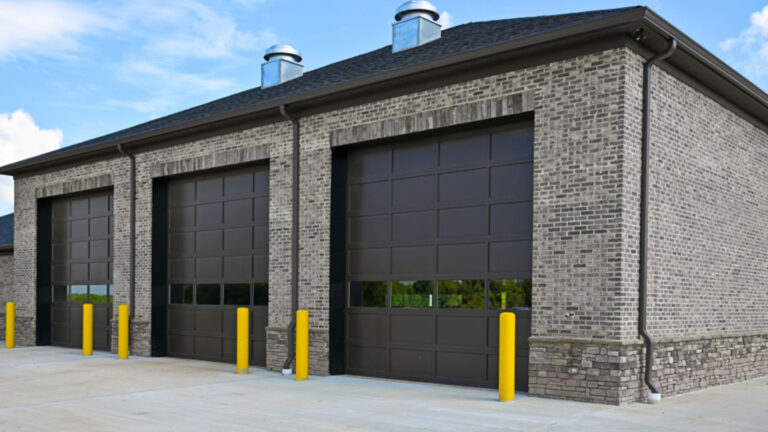
Here at Overhead Door Pros in Edmonton, we get it. You step outside, take a deep breath of that fresh prairie air, and immediately get a mouthful of your neighbor’s topsoil. Welcome to life on the Canadian plains, where the wind doesn’t just blow; it has a personal vendetta against anything not nailed down. And let’s be honest, a standard garage door often looks like a giant, flimsy sail just waiting for its moment to become a very expensive, very dangerous kite.
So, what actually separates a regular garage door from a truly wind-resistant warrior? It’s not just marketing fluff. It’s a combination of engineering, materials, and, most importantly, proper installation. Let’s break it down together, fellow prairie dweller.
The Prairie Wind: Our Unwelcome Neighbor
We don’t need to tell you that our weather has… personality. One minute it’s sunny, the next, your garbage cans are halfway to Saskatchewan. This constant pressure and suction from high winds test every single component of your garage door system. A weak door doesn’t just dent; it can fail catastrophically, compromising your home’s security and putting your family and belongings at serious risk.
Think of your garage door as the largest moving part of your home. It’s a big deal. When a wind-resistant system is built and installed correctly, it stands firm, protecting everything behind it. Getting this right isn’t just about convenience; it’s about safety and peace of mind.
Deconstructing the Beast: What Makes a Door Wind-Resistant?
It’s not one magic feature. A truly robust door is the sum of its heavily fortified parts. When we at Overhead Door Pros talk about wind-load rating, this is the stuff we’re looking at.
The Bones: Stronger Materials & Construction
Forget the thin, flimsy panels you might see on bargain-basement models. Wind-resistant doors are built differently from the ground up.
- Heavy-Gauge Steel: This is the big one. The “gauge” refers to the thickness of the steel. A lower number means a thicker, stronger metal. Where a standard door might use 28-gauge steel, a wind-rated door will often use 24-gauge or even thicker. You can literally feel the weight difference.
- Reinforced Sections: The individual sections of the door are deeper and often include internal struts and reinforcements. These act like the ribs of the door, preventing it from flexing and buckling under pressure.
- Sturdy Hardware: This is non-negotiable. We’re talking heavy-duty hinges with reinforced bearing plates and robust roller brackets. Flimsy hardware is the first thing to fail in a storm, and trust us, you do not want to be dealing with a garage door track repair or a garage door spring repair in the middle of a wind event.
The Skeleton: The All-Important Bracing System
This is the secret sauce. A wind-resistant door has a completely different internal bracing structure. Horizontal and vertical reinforcements are strategically placed across the back of the door to distribute wind force evenly across the entire surface.
A standard door might have a few thin struts. A wind-rated door has a full ladder-back or double-vertical bracing system that makes it incredibly rigid. It transforms the door from a flexible sheet into a solid, impact-resistant barrier.
The Seal: Keeping the Elements Actually Out
What good is a strong door if wind, rain, and dust are whistling through the gaps? A proper seal is critical.
- Weatherstripping: We’re not talking about the floppy little rubber strip on the bottom. We’re talking about heavy-duty, industrial-grade weather seals around the entire perimeter of the door. This creates an airtight seal when the door is closed.
- Bottom Seal: A robust, flexible bottom seal is essential for keeping driving rain and snow from pouring into your garage. For our climate, this is a game-changer.
The Installation: Where the Magic (or Disaster) Happens
Here’s the kicker: you can buy the most expensive, expertly engineered wind-resistant door on the planet, and if it’s installed poorly, it might as well be made of tissue paper. Proper installation is everything.
The door must be perfectly squared and aligned within the opening. The tracks must be securely anchored with heavy-duty bolts directly into the structural wood framing of the house—not just into the drywall or siding. The springs must be precisely calibrated for the door’s weight. This is not a DIY project. This is a job for a professional garage door technician who understands the specific demands of our region.
Ever wondered why a new door sometimes seems worse than the old one? Nine times out of ten, it’s the installation. That’s why the team at Overhead Door Pros takes so much pride in our work. We’ve seen the aftermath of shoddy installations, and we make sure your door is a fortress, not a liability.
Choosing Your Champion: A Quick Comparison
Not all wind-resistant doors are created equal. The rating system can help you understand what you’re getting. Doors are tested and rated for both positive (wind pushing against the door) and negative (wind trying to suck the door out) pressure.
Here’s a simplified look at what you might be considering:
| Feature | Standard Residential Door | Wind-Resistant Door (e.g., for 130 km/h winds) | Commercial Grade Door |
|---|---|---|---|
| Steel Gauge | 27-28 Gauge (Thinner) | 24-25 Gauge (Thicker) | 22-24 Gauge (Heaviest) |
| Internal Bracing | Minimal or Basic Struts | Full Ladder-Back or Double-Vertical Bracing | Extreme Reinforcement |
| Hardware | Standard Hinges/Brackets | Heavy-Duty, Reinforced Hardware | Industrial-Grade Hardware |
| Wind Rating | Not Rated | Tested & Certified for Specific Speeds | Highest Ratings for Large Openings |
| Best For | Sheltered Urban Areas | Exposed Prairie Homes | Warehouses, Commercial Overhead Door Repair needs |
FYI, for most homes in and around Edmonton, we recommend a door rated for at least 130 km/h winds. It’s that extra margin of safety that lets you sleep soundly during a storm.
Beyond the Door: The Opener Matters Too
A wind-resistant door is heavier. A standard opener will strain, groan, and likely burn out its motor trying to lift it. You need a garage door opener with enough horsepower to handle the load smoothly. This is a key part of any automatic garage door installation we do. We match a powerful, reliable opener to your specific door to ensure the entire system works in harmony.
So, Is a Wind-Resistant Door More Expensive?
Let’s talk price. IMO, this is the wrong question. The right question is: what is the cost of not having one?
Yes, the upfront investment is higher than that of a standard door. You’re paying for more steel, more engineering, and more labor to install it correctly. But consider what you’re protecting: your cars, your tools, your seasonal storage, and most importantly, the structural integrity of your home itself.
A failed door can lead to:
- Thousands in property damage from wind and water.
- A massive security risk.
- Costly emergency garage door repair or a full garage door replacement.
When you factor in the potential savings on insurance deductibles and the invaluable peace of mind, a wind-resistant door isn’t an expense; it’s one of the smartest investments a prairie homeowner can make. And as a trusted garage door company, Overhead Door Pros works hard to provide affordable and flexible solutions because we believe this level of protection should be accessible.
Your Local Experts: We Speak Prairie
This isn’t just theoretical for us. We live and work here. We’ve answered the call for emergency commercial garage door repair after a microburst has damaged a business. We’ve helped homeowners pick up the pieces after a less-than-reputable garage door contractor installed a door that couldn’t handle our first big blow of the season.
We know what works because we see what fails. When you search for “garage door services near me” or “commercial overhead door repair near me,” you deserve a team that gets it.
Let’s Get Your Home Fortified
Your garage door is your home’s first line of defense against our wild weather. Don’t trust it to just anyone.
Contact us at Overhead Door Pros for a free, no-obligation estimate. One of our friendly, experienced technicians will come to your home, assess your exposure, and walk you through the best options for your needs and budget. Let’s make sure your garage door is ready for whatever our beautiful, blustery prairie throws at it.
Frequently Asked Questions
Q: Can I just reinforce my existing garage door to make it wind-resistant?
A: Generally, no. Retrofitting struts and bracing to an existing door not designed for it is risky. The door sections and existing hardware weren’t engineered to handle the stress points of reinforcement. The safest and most effective solution is almost always a complete garage door replacement with a properly rated and certified product.
Q: My door is wind-rated, but it still shakes and makes noise in the wind. Is that normal?
A: A little noise and vibration can be normal in extreme winds, but excessive shaking often points to an installation issue. The most common culprit is track that isn’t securely fastened to the wall with long, structural-grade bolts. It’s worth having a pro from a reputable garage door company like ours come take a look to ensure everything is anchored as it should be.
Q: How long does a professional wind-resistant garage door installation take?
A: For a typical two-car residential garage, our team at Overhead Door Pros can usually remove the old door and complete the full installation of a new wind-resistant system in just a few hours. We pride ourselves on efficient, clean, and thorough service with minimal disruption to your day.

